After the Scan: Is Your QR Page Losing the Conversation?
Published by Creativall QR · Updated 2026-10-11
The printed QR is often treated as the finished product: choose a color, add a logo, scan it once and send the artwork to print. But the visitor's experience continues after the camera recognizes the pattern. They arrive somewhere, decide whether the page makes sense and look for a reason to keep going.
That destination deserves as much attention as the code. A perfectly readable QR can open a page that is unfamiliar, confusing or simply unrelated to the promise printed beside it.
The text beside the QR sets an expectation
A visitor who sees "Save my contact" expects contact details. Someone who sees "View the menu" expects a menu. A generic "Scan me" leaves more room for uncertainty. The label does not need to make a dramatic promise; it should tell the person what opening the destination will help them do.
Consider a hypothetical event card whose QR says "See my work" but opens an undifferentiated collection of social profiles. The destination may be technically correct, yet the visitor still needs to find the promised work. The promise and the destination do not match.
Recognition helps the page explain itself
A familiar name, logo or card image can connect the destination with the object that was scanned. If a visitor scans a business card and sees a different brand with little explanation, they have to work out whether they reached the right place.
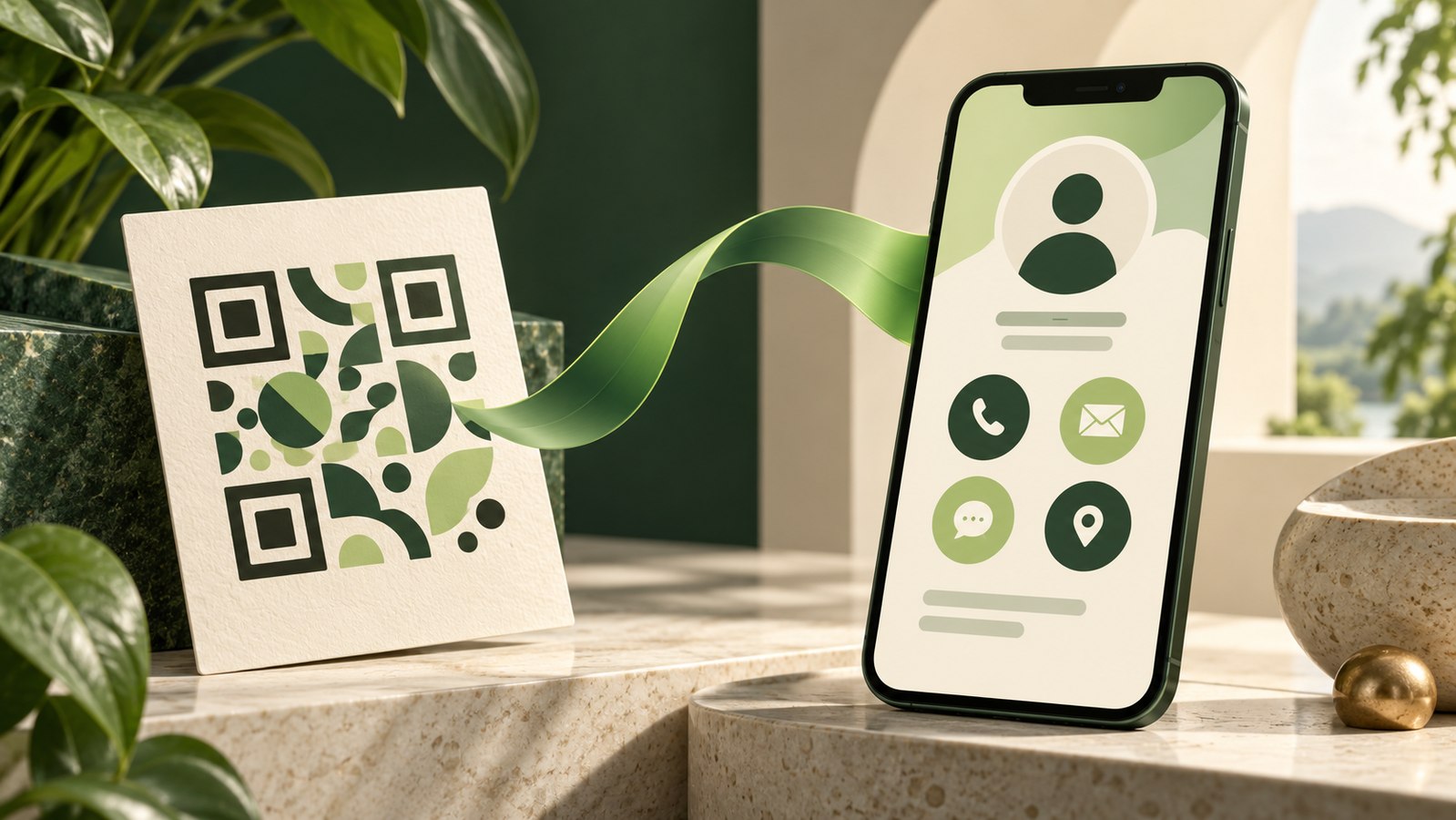
In a hosted digital card, the supplied artwork can establish that connection while the text and buttons provide usable details. The image supports recognition; clear labels explain the action. Neither a decorative image nor a row of unlabeled icons should have to carry the whole explanation.
One purpose does not mean one possible action
A contact page can offer a phone call, WhatsApp, email and a contact download while retaining one overall purpose: continue the introduction. Those alternatives serve visitors with different preferences. They are easier to understand when the labels describe the action rather than implying that every tap achieves the same result.
A link page serves a broader purpose. It can direct people toward several resources, but its links need an understandable order. An existing portfolio, booking page or company website can be linked without suggesting that the QR platform itself runs those services.
The destination needs to work for a visitor
Creators often test while signed in to their own accounts. That can hide a problem with a private document or a restricted destination. The meaningful question is whether the intended visitor can open the page with the access they actually have.
Public cards in this workspace can be opened without registration. That should remain distinct from the creator's dashboard, where signing in is needed to edit saved projects. Sending a visitor to an account workspace instead of the public card changes the experience entirely.
A scan count is not a conversation count
The current dashboard counts requests to dynamic links. A request can come from a test or an automated client, and opening a page does not establish that a person called, saved a contact or became a customer. A large request total should not be presented as verified sales or unique visitors.
Use the count as one limited signal and keep business outcomes separate. If someone tells you that they reached you through a card, that is useful feedback. It still does not justify claiming that every other request produced the same outcome.
Design the destination before distributing the code
The QR creates a handoff between an object and a page. Make the promise beside the code match that page, keep the identity recognizable and give the visitor a clear way to continue. Then test the complete handoff using the final file and destination.
A good post-scan experience cannot force a conversation. It can make the next step understandable for someone who is already interested.